Under the updated Work Health & Safety legislation, Australian employers now have a proactive legal duty to identify, assess, and control psychosocial hazards in the workplace. This is not a recommendation. It is a legal obligation – and it applies to every organisation, regardless of size or industry.
Psychosocial hazards are the conditions, demands, and dynamics in your workplace that pose a risk to the psychological health of your people. Under the new mandate, you are required to address them before incidents occur — not after.
The old model — wait for someone to reach a crisis point, then refer them to an EAP — no longer meets your duty of care. The mandate requires evidence of proactive, ongoing psychosocial risk management. A helpline number on your intranet is not compliance.

The psychosocial safety mandate identifies seven domains that every Australian employer must proactively address. These are not abstract concepts — they are the daily realities your people are already living with, whether you can see them or not.
People who feel micromanaged or powerless experience significantly higher rates of anxiety and burnout. Autonomy is a psychological safety issue, not a management style preference.
The single biggest driver of mental health claims is poor leadership. How your managers communicate, support, and lead directly determines your psychosocial risk profile.
Unresolved conflict, bullying, harassment, and poor team dynamics all create measurable psychological harm. These cannot be managed with a policy document alone.
Restructures, redundancies, leadership changes, and uncertainty — when poorly managed — create psychosocial risk. How change is communicated matters as much as the change itself.
Employees in high – trauma roles, remote locations, or isolated work conditions face elevated psychosocial risk and require specific, consistent support — not generic wellbeing programs.
This is not a projection. The following is a conservative cost scenario for a 1,000 – person organisation, built entirely from verified Australian industry data. These costs are already occurring – most are simply invisible on any P&L.
200 affected employees × $3,200
200 affected employees × $1,680
95 leavers × $32,412 replacement cost
Est. 4 serious claims × $67,400 median
Per 1,000 employees / per year
Conservative 30% improvement in key cost drivers
Sources : Black Dog Institute, Safe Work NSW, ABS 2024, Safe Work Australia Key WHS Statistics 2025, PwC/Beyond Blue Workplace Mental Health Report. Compensation claim estimate based on 12% of serious claims being mental health related.
Absenteeism
200 affected employees ×
$3,200
$640,000
Staff Turnover
TOTAL ESTIMATED ANNUAL COST
Conservative 30% improvement
in key cost drivers
Most business leaders are not ignoring the problem. They simply do not have the right tools to see it, address it, or prove they are managing it. Here is what the evidence consistently shows ab out Australian workplaces operating under these new obligations.
1 in 5 employees is struggling right now — but most have told no one. Stigma, fear of judgment, and distrust in available systems mean the people who need support most are the least likely to seek it.
The average EAP utilisation rate across Australia is around 5%. That means up to 95% of your workforce-including those in the most distress – are not engaging with the support you are paying to provide.
HR teams and line managers are expected to identify and respond to psychological distress – without the training, time, or tools to do it well. The burden falls on people who were never set up to carry it.
Annual surveys, one – day workshops, and awareness campaigns create the appearance of action. They do not change the daily thinking patterns that drive psychosocial risk. The science is unambiguous on this.
When a claim is made or an audit occurs, organisations need to demonstrate ongoing, structured psychological support. Most cannot. Without evidence, the cost — legal, financial, reputational — is severe.
Mental health compensation claims are the fastest -growing category in Australian workers compensation — up 161% over the past decade. The median payout is $67,400. The median time off work: 35.7 weeks.

Every session creates a window where change is possible. Most models hope it lasts—Quality Mind AI keeps it open.
Neuro-Repetition™ is Rich Maloney’s proprietary system, built from 27 years of coaching, delivering daily reinforcement that turns insight into lasting change. Proven on real people and refined over decades.
The science is simple: up to 95% of behaviour is subconscious. While the conscious mind learns through sessions, the subconscious changes through repetition and practice.
Neuro-Repetition™ delivers that reinforcement every day—so your coaching doesn’t fade, it sticks.
Quality Mind AI is not a wellness app. It is not an EAP alternative. It is a proactive, always – on mental performance and psychosocial risk management platform — built specifically to help Australian organisations meet their 2025 obligations while delivering genuine, lasting change for their people.
Built on 27 years of proven behavioural methodology and powered by Neuro – Repetition™ — Rich Maloney’s proprietary technology — it delivers the kind of consistent daily reinforcement that turns awareness into habit, and habit into culture.
Every other wellbeing program your organisation has invested in had the same structural flaw – it delivered information without consistent reinforcement. People attended, nodded, and returned to exactly the same patterns. Quality Mind AI works continuously, every day, in the moments between sessions where 60% of real behaviour change actually happens.
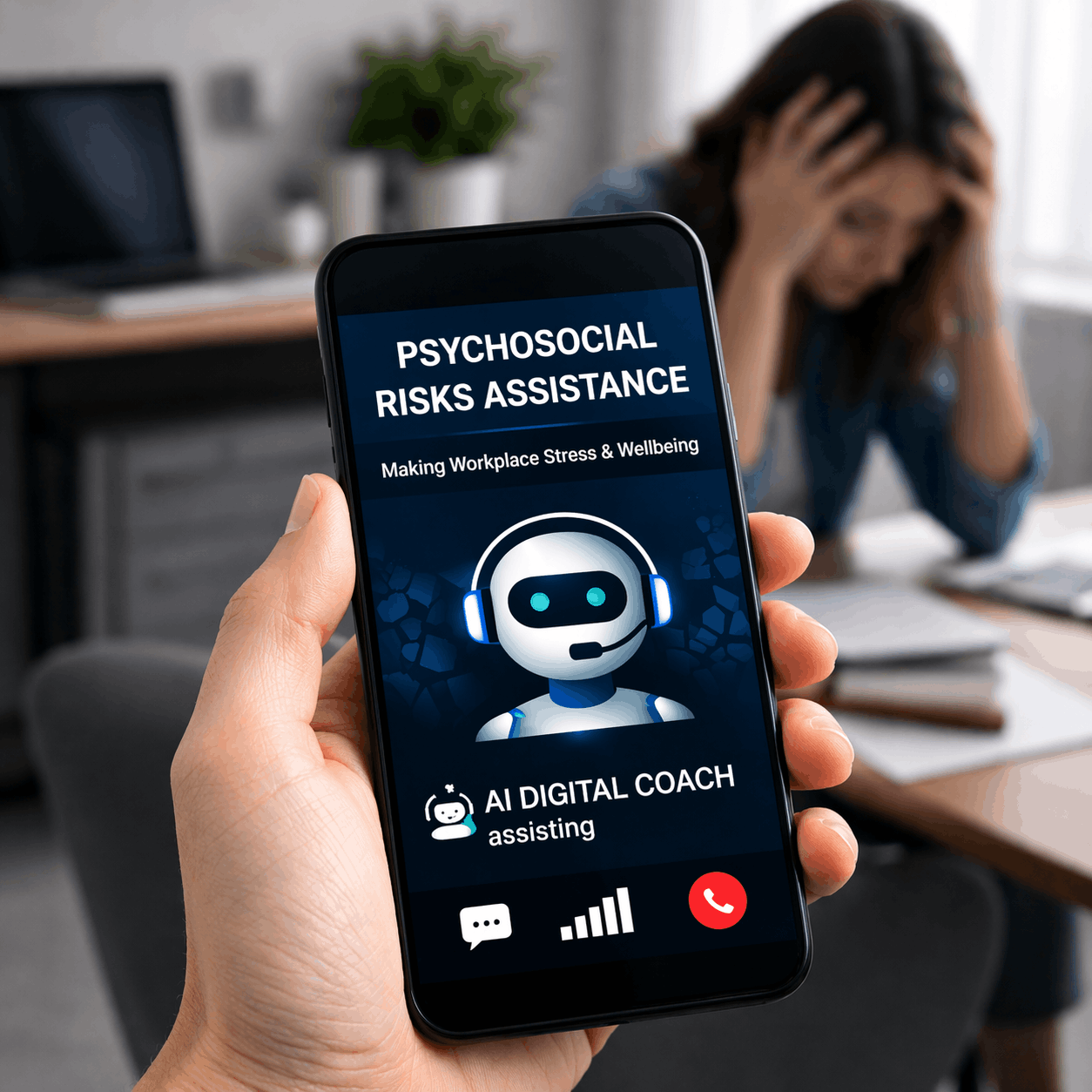
Quality Mind AI does not address the psychosocial mandate through paperwork and policy. It addresses it through genuine daily support that changes how your people think, communicate, and perform — with the evidence trail to prove it.
Daily reinforcement of clarity, prioritisation frameworks, and pressure management tools – reducing the psychological load of high – demand roles before it becomes a hazard.
Builds internal locus of control through consistent mindset tools — helping employees develop the psychological resources to navigate environments where external control is limited
Leadership support module builds the emotional regulation, communication skills, and psychological safety behaviours that define effective, low – risk leadership
Daily positive reinforcement and self – worth tools address the internal experience of recognition – supporting employees regardless of what their direct manager is or isn’t providing.
Structured resilience and uncertainty management tools help employees navigate change without the anxiety and disengagement that drive psychosocial claims during transitions.
Every employee has access to a Quality Mind AI digital coach at any hour of the day or night. Private, text – based, stigma – free. No appointments. No wait lists. No barriers to access.
Powered by Rich Maloney’s proprietary methodology – the same system that has delivered
measurable results for 27 years. Daily reinforcement of the thinking patterns that drive wellbeing, performance, and resilience.
300+ guided meditations, daily journaling, mood and habit tracking, and subconscious reprogramming tools – giving every employee a self – coaching toolkit they can use independently, every day
Leaders are supported with daily reinforcement of decision – making frameworks, emotional regulation, and high – performance mindset habits – because psychosocial risk starts at the top.
Quality Mind AI provides organisations with structured evidence of ongoing, proactive psychological support – critical for regulatory reporting, audit trails, and demonstrating genuine duty of care.
For organisations that want to go deeper – certified Mind Mentors are available as an integrated option, adding live group or individual sessions alongside the AI platform.
The following outcomes were captured across a 2024 analysis of 100 clients over a 24 – week program period – measured, not self – reported.
Improvement Reduction in mind chatter – negative, intrusive, and uncontrolled thinking patterns
Improvement Present – moment awareness and emotional regulation
Improvement Letting go and forgiveness – releasing rumination and past – focused thinking
Improvement Quality of sleep and recovery
Increase Average overall wellbeing survey results across program participants
Decrease in K-10 Psychological Stress Scale scores—a clinically validated measure of psychological distress
9 questions to uncover your strengths and challenges in mind, body, and soul.
Fill out the survey before, mid and after the program.
Our programs align body, mind, and soul for increased passion, energy, and confidence.
PwC and Beyond Blue’s landmark Workplace Mental Health report found that organisations investing proactively in employee mental health receive an average return of $3 for every $1 spent – through reduced absenteeism, higher productivity, lower turnover, and fewer compensation claims. Quality Mind AI is not a cost. It is an investment with a documented return
Scalable across large workforces – every employee gets always – on support without increasing HR overhead or EAP cost. Compliance evidence built in from day one.
Male – dominated industries with the highest rates of mental health stigma and the lowest EAP utilisation. Private, text – based delivery removes every barrier to accessing support.
Some of the highest burnout and trauma exposure rates of any sector. Daily resilience support that sustains performance in high – pressure clinical environments.
Teachers and support staff among the most psychologically pressured workforces in Australia. Daily support that requires no referral, no appointment, no self -disclosure to a manager.
High – performing cultures that create high – pressure environments. Supports mindset and resilience without requiring employees to admit struggle in a visible setting.
Enterprise – grade psychosocial risk management at a fraction of the cost of traditional programs. Compete on culture from day one.
The 2025 psychosocial safety mandate is not going away. The organisations that act now – building genuine, proactive mental wellness infrastructure – will not only meet their legal obligations. They will build the kind of workplace culture that attracts better people, retains them longer, and performs under pressure.
Quality Mind AI is ready to deploy. The methodology is proven. The results are documented. The only question is whether your organisation will be among the first to build a workforce that is genuinely supported —or whether you will wait until the cost of inaction forces your hand